
Reliance Capital Asset Management Company (RCAM) and ICICI Securities Primary Dealership have been selected to manage Rs 60,000 crore (Rs 600 billion) provident fund corpus of coal industry workers.

Despite the uncertainties created by rising bond yields and oil prices, fund managers have been proactively deploying fresh flows into the equity market. The cash available with equity fund managers, which has remained lower at around 5 per cent in the past few months, hit a 16-month low of 4.8 per cent in September, shows a Motilal Oswal Financial Services report. Cash holdings in equity schemes had topped 6 per cent in February amid subdued equity market sentiment.

'Choose an FD tenure that provides a balance between returns and the horizon for which you can invest.'

Leading chains plan Rs 40K crore infra revival to close capacity gap over next 3-5 years

The pre-sales volume of Godrej Properties (GPL) for third quarter of the financial year 2025 (Q3FY25) declined 6 per cent year-on-year (Y-o-Y) -- down 21 per cent quarter-on-quarter (Q-o-Q) -- to 4.1 million square feet (msf), resulting in a pre-sales value of Rs 5,450 crore, down 5 per cent each Y-o-Y and Q-o-Q. About 77 per cent came from newly launched projects. For 9MFY25, pre-sales were up 48 per cent Y-o-Y to Rs 19,300 crore.

Crypto exchange WazirX has said customers affected by the recent cyber attack will not be able to recover their full funds even as the firm looks to restructure. At a virtual press conference, the firm's advisor said at best the company might look to return 55-57 per cent of the money. "This is what can be returned to users with the benefit of this restructuring," said Jason Kardachi, managing director (restructuring), Kroll.
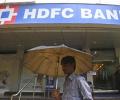
In a mixed bag for HDFC Bank ahead of the parent HDFC's merger with itself, the Reserve Bank of India has declined to make exceptions on certain aspects, and has offered some leeway on others. The country's largest private sector lender, which is aiming to conclude the merger with the home finance major by July, had written to the central bank seeking certain forbearances after announcing the $40-billion merger in April last year. In an exchange filing this evening, HDFC Bank said it received a response from RBI on Thursday and also said that there are a few pending issues.

'Cancer incidence is projected to increase by 12.8 per cent by 2025 compared with 2020, necessitating more dedicated cancer treatment centres and specialised beds.'

Aditya Birla Nuvo is in talks with global private equity players Blackstone, Carlyle and KKR to sell shareholding in its proposed holding firm for its financial services business. The financial services holding company will house its asset management, insurance, stock broking, wealth management and private equity businesses.
While a company spokesperson said Bharti would either dilute its stake or exit the venture, the fund house is trying to rope in a bank to strengthen its distribution network. In addition, an asset management venture is seen to have closer links with banks, which are looking to offer a wide range of financial products.

Inflow in equity mutual funds halved to Rs 3,240 crore in May, declining for the second consecutive month, primarily due to profit booking by investors amid rising market. However, this was also the 27th consecutive month of inflow in the equity class, which was primarily driven by fund infusion in small-cap and mid-cap categories, data released by the Association of Mutual Funds in India (Amfi) showed on Friday. Overall, the 42-player mutual fund industry continues to see inflow and attracted Rs 57,420 crore, on contributions from debt-oriented schemes.

Passive funds tracking the National Stock Exchange Nifty Next 50 Index have seen their assets under management (AUM) more than double in the past year. The index's growing popularity can be attributed to its robust 50 per cent return over the same period. Currently, the AUM of funds tracking the Nifty Next 50 index stands at nearly Rs 30,000 crore.

The Covid winter seems to be finally ending for debt-oriented mutual fund (MF) schemes as interest rates peak, especially for those that invest in shorter-maturity papers. In the past two months, shorter-horizon debt schemes - ultra-short, low-duration, and money-market - have together raked in net inflows of Rs 48,000 crore, the highest for two months since April-May 2021. These schemes invest in shorter-maturity papers ranging from three months to a year.

Gold is an excellent asset class for diversification and should be included in all long-term portfolios.

Companies featuring in the Next 500 list are mostly mid-sized and termed as the 'small wonders' by the magazine.

Delhi deputy Chief Minister and AAP leader Manish Sisodia has been named as an accused in the case.

'Investors should focus on largecap funds, flexicap funds, business cycle funds, or hybrid-category funds.'

Follow this 15 x 15 x 15 rule to become a crorepati without taking big risks. Ramalingam Kalirajan explains how

'Investors should not go for lump-sum investments in infrastructure funds at this point.' 'The SIP route is the best to avoid any major disappointment.'

The contribution from asset management companies (AMCs) has surpassed the Rs 3,000 crore target for the creation of a Rs 33,000 crore backstop facility for debt mutual funds (MFs). The initial corpus for the Corporate Debt Market Development Fund (CDMDF) is nearly Rs 3,100 crore, according to multiple government officials and AMC executives. "The fund is operational now. "The required corpus has been raised by AMCs and the remaining part (Rs 30,000 crore) is in the form of a guarantee from the government which will be activated only in case of a credit event," explained D P Singh, joint CEO and deputy MD, SBI MF.

Increasing awareness about mutual funds, ease of transactions through digitisation and sharp surge in equity markets have aided asset management companies to add a staggering 3.17 crore investor accounts in 2021-22, with experts saying the trend is likely to continue this fiscal as well. This was a significant rise from 2020-21 when 81 lakh accounts (or folios in mutual fund parlance) were opened, data with the Association of Mutual Funds in India (Amfi) showed. The ongoing financial year too appears to be promising in terms of folios as increase in investor accounts will enable people to move beyond fixed deposits and savings accounts, said Priti Rathi Gupta, founder of LXME, a financial platform for women.

Power Grid Corporation of India's (PWGR's) Q3FY25 revenue declined 3 per cent year-on-year (Y-o-Y) to Rs 11,200 crore, with operating profit falling 7 per cent Y-o-Y to Rs 9,500 crore and margin contracting to 85 per cent from 91 per cent Y-o-Y. Other income surged 89 per cent Y-o-Y to Rs 500 crore, but regulatory income dropped 62 per cent Y-o-Y to Rs 42.5 crore.

'Earlier, our cost of funds was higher than most in the peer group.'

'Midcap and smallcap indices are trading in the expensive zone.'

Both new and completed project values as of December 2024 remain below pre-pandemic levels seen in 2019.

While India has become the largest data generating nation, and hosts more than 152 data centres, it is fed by only 18 undersea cables.

Debt as an investment avenue for the wealthy has been attracting more assets than equity. The portfolio management service (PMS) industry, whose services require a minimum investment of Rs 50 lakh, has seen a 4.4 per cent decline in equity assets since March 2022.
It is estimating that this would help monetise assets worth Rs 10,000 crore.

'The incentives to switch to the new tax regime... are viewed as a negative due to potential loss of customers who buy policies for saving tax.' 'The tax-saving value proposition for the sector reduces.'

Raymond Limited's real estate arm, Raymond Realty, plans to get listed during the second quarter of the next financial year (Q2FY26), according to Harmohan Sahni, chief executive officer (CEO), Raymond Realty. "We are expecting the order by June-July 2025 as far as the National Company Law Tribunal (NCLT) is concerned.

The restructuring of UTI, which started seven years ago when the country's oldest mutual fund failed to meet redemption obligations, is nearly complete.

'There have been many cases where clients have indicated that they feel suicidal as they feel they have no other options to deal with their financial hardship.'

All banks are eligible for privatisation. A committee of secretaries will decide which banks will be privatised, says Financial Services Secretary Debasish Panda.

Honda Cars India (HCIL) net profit dropped by 52.8 per cent year-on-year (Y-o-Y) to Rs 661.4 crore in 2023-24 (FY24), primarily due to deferred tax of Rs 359.8 crore, according to the annual results submitted to the Registrar of Companies (RoC) and reviewed by Business Standard. In FY24, the company's production increased by 16 per cent Y-o-Y to 134,807 units.

'It makes sense to have gold in one's portfolio keeping the political and economic risks of 2024 in mind.'

ICICI Prudential Life Insurance (IPRU) disappointed the market even though some analysts said the Q3FY25 results were in line. Most analysts cut margin estimates. The insurer reported M9FY25 growth of 8.5 per cent year-on-year (Y-o-Y) in value of new business (VNB) premium to Rs 1,575 crore, while total annual premium equivalent (APE) grew 27.2 per cent to Rs 6,910 crore.

Share prices of Nestle India, Asian Paints, Bandhan Bank, Tata Technologies, AU Small Finance Bank and Avenue Supermarts, all a part of the BSE 500 index, have hit their respective 52-week lows on the BSE in Thursday's intra-day trade after a sharp correction in the equity markets.

Experts say a lot of new wealth is being generated by promoters selling their stake.

Advisory committee for lower charges, stricter compliance.
